

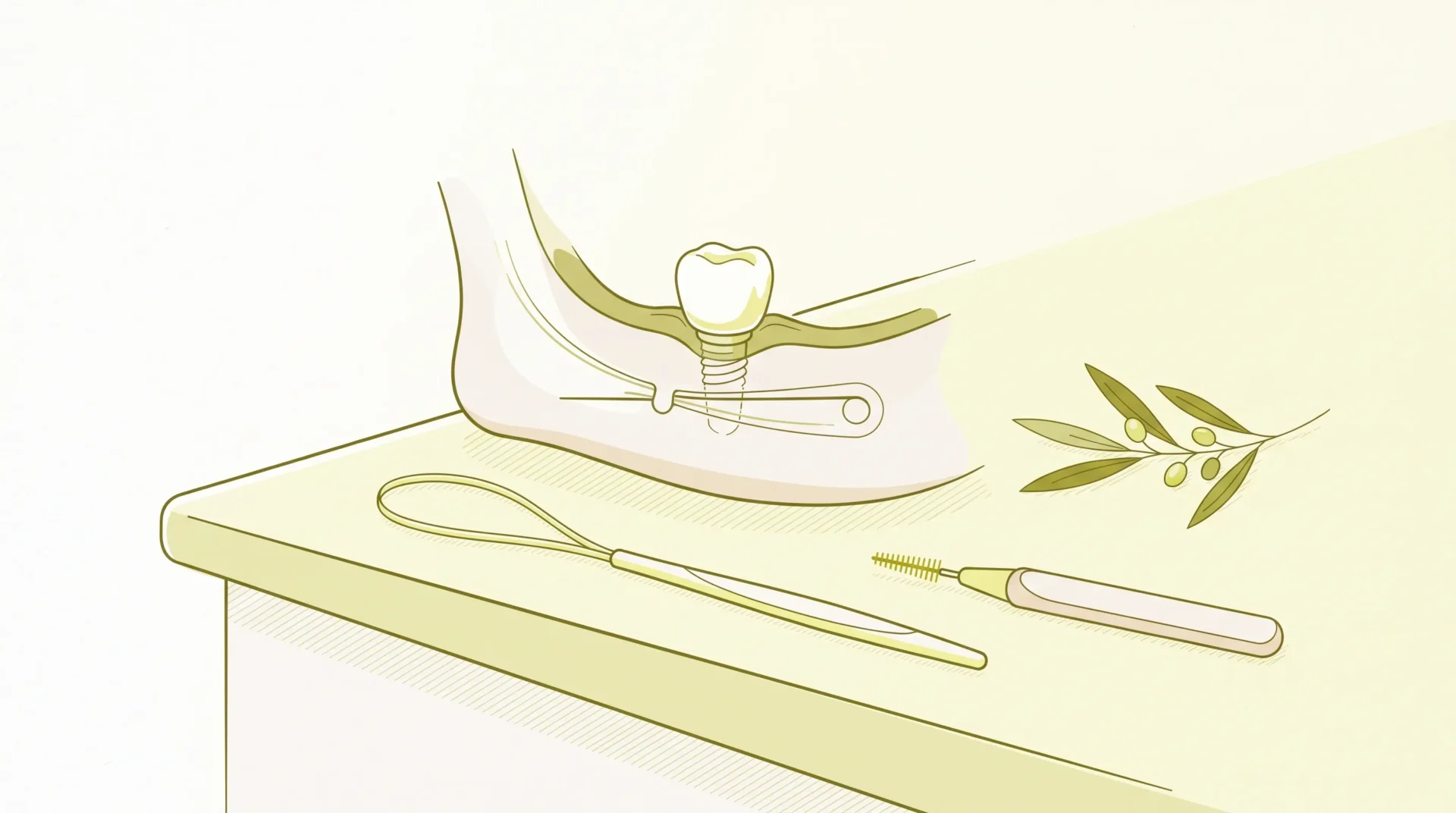
If you are missing one or more teeth, you may be comparing dental implants and dental bridges with a dentist or cosmetic dental clinic. The short answer is that an implant replaces a missing tooth by supporting a crown from the jawbone, while a bridge fills a gap by attaching an artificial tooth to neighbouring teeth or implants.
Both options can be used to restore chewing function and appearance. They differ in how they are placed, how they are cleaned, how long treatment may take and who they may suit. A dental examination is needed before either option can be recommended, because suitability depends on your oral health, medical history, bite, bone levels and personal preferences.
Quick comparison: dental implants and bridges
| Feature | Dental implant | Dental bridge |
|---|---|---|
| How it is supported | A fixture is placed in the jawbone to support a crown | An artificial tooth is attached to crowns or wings on neighbouring teeth, or sometimes to implants |
| Effect on neighbouring teeth | Often does not require reshaping adjacent teeth | A conventional bridge usually requires neighbouring teeth to be reshaped for crowns |
| Surgery | Involves a minor surgical procedure | Usually does not involve implant surgery if supported by natural teeth |
| Treatment time | Often takes longer because healing is needed before the final crown | May be completed sooner, depending on tooth and gum health |
| Cleaning | Cleaned like a tooth, with extra care around the gumline | Requires cleaning under the artificial tooth using floss threaders or other aids |
| Suitability | Depends on bone, gum health, medical factors and smoking status | Depends on the strength and health of neighbouring teeth |
| Costs | Often higher upfront, especially if grafting or extra imaging is needed | Costs vary based on materials, tooth number and complexity |
This table is a starting point only. The better option is not the same for everyone, and some people may have several reasonable choices.
What is a dental implant?
A dental implant is a small fixture, commonly made from titanium, that is placed into the jawbone. Over time, the bone may heal around the implant surface in a process called osseointegration. Once the implant is stable, it can support an abutment, which is a connector, and a crown, which is the visible tooth-shaped restoration.
An implant can replace a single tooth, or several implants may be used to support a bridge or denture. For a single missing tooth, the main appeal is that the implant-supported crown does not usually rely on the teeth beside the gap for support.
Implant treatment is not suitable for everyone. Your dentist will assess factors such as gum health, bone volume, your bite, oral hygiene, medical conditions, medications and whether you smoke or vape. Some patients need additional procedures, such as bone grafting, before an implant can be considered. Others may be better suited to a bridge, denture or another approach.
What is a dental bridge?
A dental bridge is a fixed restoration that replaces one or more missing teeth. The artificial tooth in the gap is called a pontic. A conventional bridge is usually held in place by crowns on the neighbouring teeth. These supporting teeth are reshaped so the crowns can fit over them.
There are also other types of bridges. A resin-bonded bridge, sometimes called a Maryland bridge, uses a wing bonded to the back of a neighbouring tooth. This can be more conservative in selected cases, though it is not suitable for every bite or every missing tooth. An implant-supported bridge may be considered when several teeth are missing and implants are being used for support.
A bridge can be a helpful option when the teeth beside the gap already need crowns or have large existing fillings. If the neighbouring teeth are healthy and unrestored, reshaping them for a bridge may be a bigger trade-off, so this should be discussed carefully.
How a cosmetic dental clinic compares implants and bridges
At a cosmetic dental clinic, the comparison should not focus only on how the final tooth looks. A well-planned tooth replacement also needs to consider bite, gum shape, tooth colour, speech, cleaning access and the condition of nearby teeth.
It may help to think of this as a restoration decision. Just as a carefully considered home renovation depends on the existing structure before new work begins, tooth replacement planning starts by checking the gums, bone, bite and neighbouring teeth.
Your dentist may consider:
- How many teeth are missing and where the gap is located
- Whether the neighbouring teeth are healthy, filled, crowned or mobile
- The amount and shape of bone in the area
- Whether gum disease, tooth decay or grinding habits are present
- Your medical history and current medications
- How comfortable you are with surgery, healing time and maintenance
- Your treatment goals, budget and timeframes
Appearance matters, especially for front teeth, but a tooth replacement also needs to be cleanable and stable under everyday chewing forces.
Key differences to understand before choosing
1. How each option is supported
An implant is designed to be supported by the jawbone. Because it does not usually rely on neighbouring teeth, it may be considered when the teeth beside the gap are healthy and your bone and gum conditions are suitable.
A bridge is supported by neighbouring teeth or implants. This can be useful when the neighbouring teeth already need crowns, but it also means those teeth carry extra load. If one supporting tooth develops decay, fracture or gum problems, the bridge may be affected.
2. Impact on neighbouring teeth
This is one of the biggest practical differences. A conventional bridge usually requires enamel to be removed from the neighbouring teeth so crowns can be fitted. Once tooth structure is removed, it cannot be replaced naturally.
With a single dental implant, neighbouring teeth often do not need to be reshaped. However, implant treatment involves surgery and depends on the quality and quantity of bone in the jaw. For some people, avoiding surgery may be a higher priority than preserving adjacent tooth structure.
3. Treatment time
A bridge may be completed over fewer appointments once the teeth and gums are ready. The process commonly involves preparing the supporting teeth, taking scans or impressions, fitting a temporary restoration when appropriate and then fitting the final bridge.
Implant treatment usually takes longer because the area needs time to heal. If a tooth has recently been removed, the dentist may recommend waiting before implant placement, immediate implant placement in selected cases or a staged approach. If bone grafting is needed, treatment may take additional months. The timing varies between patients.
4. Cleaning and maintenance
Both implants and bridges need careful cleaning. Neither option is a set-and-forget treatment.
An implant crown is cleaned around the gumline, similar to a natural tooth. Your dentist or hygienist may recommend specific brushes or floss techniques to reduce plaque around the implant. Gum inflammation around implants can become a concern if plaque builds up.
A bridge requires cleaning under the pontic, because food and plaque can collect beneath the artificial tooth. Floss threaders, interdental brushes or water flossers may be suggested depending on the bridge design and your dexterity.
5. Appearance and feel
Both dental implants and bridges can be made to blend with surrounding teeth, but outcomes vary. Tooth colour, gum levels, bone shape, lip movement and the position of the missing tooth all influence the final appearance.
For front teeth, gum contour can be especially important. Some implant cases may need staged planning to support the gum shape. Some bridge cases may give a pleasing appearance by shaping the pontic to sit naturally against the gum, but this depends on the gum and bone after tooth loss.
Possible risks and limitations
All dental procedures carry potential benefits and risks. Your dentist should explain these in relation to your circumstances before treatment begins.
Dental implant risks may include infection, bleeding, discomfort after surgery, delayed healing, implant failure, gum recession, damage or irritation to nearby structures and sinus-related considerations for some upper jaw cases. Smoking, uncontrolled gum disease, some medical conditions and certain medications may affect healing or suitability.
Dental bridge risks may include sensitivity after tooth preparation, decay around crown margins, gum irritation, difficulty cleaning underneath, porcelain or material chipping and the possibility that a supporting tooth may later need root canal treatment or extraction. If a supporting tooth fails, the bridge may need repair or replacement.
Neither option lasts forever for every patient. Long-term outcomes depend on factors such as oral hygiene, diet, bite forces, grinding habits, regular dental care and general health.
When might an implant be considered?
A dental implant may be considered when a patient has a missing tooth, healthy gums, enough suitable bone and a preference to avoid placing crowns on neighbouring healthy teeth. It may also be considered when a removable denture is not preferred or when stability is a key concern.
An implant may not be appropriate if there is active gum disease, inadequate bone without grafting, certain medical concerns or if surgery is not suitable or preferred. Some patients decide against implants because of treatment time, cost, medical considerations or personal preference.
When might a bridge be considered?
A dental bridge may be considered when the teeth beside the gap are strong enough to support it, particularly if those teeth already need crowns. It may also be considered for patients who are not suitable for implant surgery, do not want surgery or prefer a treatment pathway that may be shorter.
A bridge may not be ideal if the neighbouring teeth are very healthy and would need significant reshaping, if the supporting teeth have a poor long-term outlook or if cleaning access would be difficult.
Cost factors for dental implants and bridges
Costs vary because treatment plans vary. A single implant may involve consultation, imaging, surgical placement, healing components, the abutment and the final crown. Extra procedures, such as bone grafting or tooth removal, may affect the total cost.
A bridge cost may depend on the number of teeth involved, the material chosen, whether supporting teeth need fillings or root canal treatment and the laboratory work required.
Private health insurance rebates differ between funds and levels of extras cover. Waiting periods, annual limits, item numbers and preferred provider arrangements may affect your out-of-pocket cost. If you are comparing treatment options, this guide to using private health insurance for dental care explains common terms that may help you ask clearer questions.
At Toorak Village Dental Care, an itemised treatment plan can be discussed after an assessment. Payment options, including interest-free payment plans where applicable, can also be discussed before you decide whether to proceed.
What an assessment may involve in Toorak
If you live or work near Toorak Village, South Yarra, Armadale, Prahran, Malvern or Hawthorn, an assessment for dental implants or bridges usually begins with a conversation about your concerns, goals and medical history.
Your dentist may examine your teeth, gums and bite. Imaging such as dental X-rays or scans may be recommended if needed to assess the missing tooth area, nearby roots and bone levels. The dentist may also check for decay, gum disease, tooth wear or grinding, because these can affect both implants and bridges.
In some cases, your general dentist may recommend input from a dental specialist, such as an oral and maxillofacial surgeon, periodontist, prosthodontist or endodontist. If you are unsure how this works in Australia, this article on general dentists and specialists explains the difference.
For complex, costly or unclear treatment plans, it can also be reasonable to seek another professional view. A second dental opinion may help you understand your options before making a decision, provided urgent dental problems are not delayed.
Questions to ask before deciding
Before choosing between an implant and a bridge, consider asking your dentist:
- What options are suitable for my mouth, and why?
- What are the benefits, risks and limitations of each option?
- What happens if I choose not to replace the tooth now?
- Will any neighbouring teeth need to be reshaped?
- Do I have enough bone for an implant, or would grafting be needed?
- How long may treatment take from start to finish?
- How will I clean the implant or bridge at home?
- What maintenance appointments may be recommended?
- What costs, rebates and payment options should I consider?
- Would a specialist referral be appropriate in my case?
A clear treatment plan should explain not only the preferred option, but also reasonable alternatives.
Frequently Asked Questions
Are dental implants better than bridges? Not always. Dental implants and bridges solve similar problems in different ways. An implant may be suitable for one person, while a bridge may be more appropriate for another. Your dentist needs to assess your teeth, gums, bone, bite and medical history before making a recommendation.
Is a dental bridge less invasive than an implant? A bridge supported by natural teeth usually avoids implant surgery, but it may require reshaping neighbouring teeth. An implant involves surgery, but it may avoid altering adjacent teeth. The less invasive option depends on your specific circumstances.
How long do dental implants and bridges last? There is no fixed lifespan that applies to everyone. Both may last for many years with appropriate care, but they can also require repair, maintenance or replacement. Oral hygiene, bite forces, grinding, diet, smoking, gum health and regular dental visits all matter.
Can I have an implant straight after a tooth is removed? Sometimes immediate implant placement may be considered, but it depends on infection, bone shape, gum condition and the position of the tooth. In other cases, waiting for healing or planning bone grafting may be more appropriate.
Will private health insurance cover implants or bridges? It depends on your extras cover, waiting periods, annual limits and fund rules. Your dental team can provide item numbers after an assessment so you can check possible rebates with your health fund.
What if I leave a missing tooth untreated? Some people choose not to replace a missing tooth immediately. In other cases, nearby teeth may drift, the opposing tooth may move, chewing may change or food may trap in the gap. A dentist can explain the likely implications for your mouth.
Discussing dental implants or bridges in Toorak
Choosing between dental implants or bridges is a personal healthcare decision, not just a cosmetic one. A dental examination can help identify which options may be appropriate, what limitations apply and what alternatives are available.
To discuss your concerns, you can arrange an assessment with the team at Toorak Village Dental Care in Toorak. Your dentist can review your oral health, explain potential benefits and risks, and provide a treatment plan based on your individual needs.
Disclaimer
The information provided on this website is for general informational and educational purposes only. It is not intended to replace professional dental advice, diagnosis or treatment. Dental needs and treatment outcomes vary between individuals. Always seek advice from a qualified dental practitioner regarding your specific circumstances before making decisions about your oral health or treatment. A consultation and clinical assessment are required to determine which treatment options may be suitable for you. All dental procedures carry potential risks and benefits, which will be discussed with you before treatment.