

A dental check-up can include several dental services, but the exact mix depends on your oral health, age, symptoms, risk factors and what your dentist finds on the day. For many people, a check-up may involve an oral examination, gum assessment, scale and clean, X-rays if clinically needed and practical advice about home care.
The purpose is not to push treatment you may not need. A check-up is a chance to understand what is happening in your mouth, identify concerns earlier where possible and discuss options in plain language before making decisions.
Dental services commonly included in a check-up
A dental check-up is usually built around prevention, assessment and patient education. Some services are routine for many patients, while others are only recommended when there is a clear reason.
| Dental service | What it may involve | When it may be included |
|---|---|---|
| Oral health history | Discussing symptoms, medical history, medications, previous dental treatment and concerns | Usually part of a new patient visit and reviewed at later appointments |
| Tooth examination | Checking for decay, cracks, wear, broken fillings and changes around crowns or restorations | Commonly part of most check-ups |
| Gum assessment | Looking for bleeding, inflammation, recession, plaque build-up or signs of gum disease | Commonly included, especially for adults |
| Scale and clean | Removing plaque and hardened calculus that brushing cannot remove | Often included, depending on gum health and clinical need |
| Dental X-rays | Images to help assess areas not visible during a visual examination | Recommended only when clinically justified |
| Soft tissue check | Looking at the cheeks, tongue, lips, palate and other soft tissues | Commonly included as part of a comprehensive oral examination |
| Bite and jaw review | Assessing tooth wear, bite pressure, jaw joints or muscle tenderness | Included when signs or symptoms suggest it may be useful |
| Preventive advice | Guidance on brushing, flossing, diet, fluoride and habits such as grinding | Often included and tailored to the person |
| Treatment discussion | Explaining findings, options, risks, benefits and likely next steps | Included when concerns are identified |
Not every appointment includes every item. For example, a person with healthy gums may need a straightforward preventive visit, while someone with bleeding gums, toothache or a history of complex treatment may need more detailed assessment.
The oral examination: what your dentist is looking for
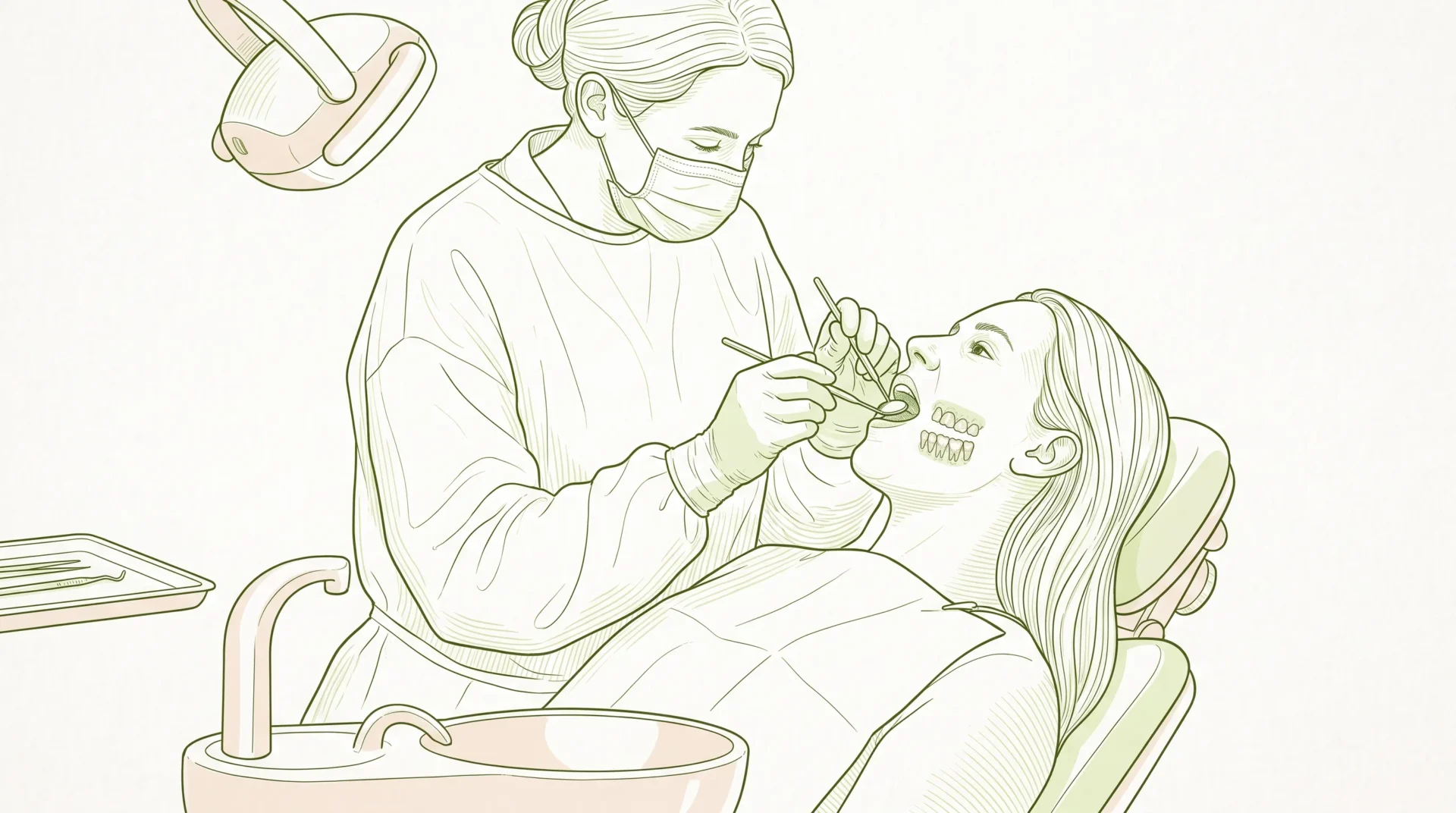
The oral examination is the central part of most check-ups. Your dentist looks at the teeth, gums and surrounding tissues, using clinical judgement to decide whether any further dental services may be appropriate.
They may check for tooth decay, cracks, tooth wear, broken fillings and changes around existing crowns, bridges, veneers or implants. Some problems are easy to see. Others sit between teeth or under old restorations, which is why X-rays may sometimes be discussed.
Your dentist may also ask about sensitivity, food getting caught, bleeding when brushing, dry mouth, clenching, headaches or changes in your bite. These details matter because they help connect what you feel day to day with what can be seen during the examination.
A check-up is also a useful time to mention cosmetic concerns, such as tooth discolouration or uneven edges. This does not mean cosmetic treatment is necessary. It simply gives your dentist the opportunity to explain whether options such as teeth whitening or restorative care may be suitable after assessing your oral health.
Gum checks and cleaning services
Gum health is a major part of preventive dentistry. Healthy gums help support the teeth, but early gum problems can be easy to miss because they may not cause pain.
During a check-up, your dentist may look for signs such as redness, swelling, bleeding, gum recession and calculus build-up. Calculus is hardened plaque that cannot be removed with normal brushing or flossing. A scale and clean may be recommended to remove it from tooth surfaces and around the gumline.
Some patients also need periodontal charting, which involves measuring the spaces between the teeth and gums. This can help assess gum disease risk or monitor changes over time. If gum disease is more advanced, your dentist may recommend additional appointments, more frequent maintenance or referral to a dental specialist when appropriate.
A clean can make the mouth feel fresher, but its main purpose is health-related. It supports plaque control and gives your dental team a clearer view of the teeth and gums.
Dental X-rays: when they may be part of a check-up
Dental X-rays are not automatically required at every visit. They are used when the information they provide is likely to assist diagnosis, monitoring or treatment planning.
X-rays may help your dentist assess:
- Decay between teeth that is not visible during a visual examination
- Bone levels around teeth, which can relate to gum health
- Infection or inflammation near tooth roots
- Impacted teeth, including wisdom teeth
- The condition of existing fillings, crowns or other restorations
Your dentist should explain why an X-ray is being recommended and how it may influence your care. If you have recent X-rays from another clinic, it may be worth mentioning this, as they may still be useful depending on their age, quality and relevance.
X-rays involve radiation exposure, so they should be used appropriately rather than routinely without a reason. Suitability depends on your age, symptoms, dental history and individual risk factors.
Oral cancer and soft tissue screening
A check-up may include a soft tissue assessment. This means your dentist looks at the lips, cheeks, tongue, floor of the mouth, palate and throat area for unusual changes.
Most changes in the mouth are not cancer, but areas that do not heal, unexplained ulcers, lumps, red or white patches, persistent soreness or difficulty swallowing should be assessed. Risk can be influenced by smoking, vaping, alcohol use, sun exposure to the lips and other health factors.
This part of the check-up is quick and non-invasive. If something needs further investigation, your dentist may review it again, arrange tests or refer you to an appropriate medical or dental practitioner. Screening does not diagnose every condition on its own, but it can help identify changes that deserve attention.
Bite, jaw and tooth wear assessment
Some dental concerns are linked to the way teeth meet or to jaw function. During a check-up, your dentist may notice tooth wear, chipped enamel, tenderness in jaw muscles or signs that you clench or grind your teeth.
Tooth grinding, also called bruxism, can happen during sleep or while awake. Not everyone who grinds their teeth needs treatment, but assessment may be useful if there is tooth damage, jaw discomfort, headaches or changes to your bite.
Your dentist may discuss monitoring, habit changes, protective appliances or restorative options depending on what is found. Treatment suitability varies, particularly where symptoms may have more than one cause.
Children’s dental services during a check-up
Children’s check-ups are usually focused on development, prevention and helping the child become familiar with dental visits. Depending on the child’s age and cooperation, the dentist may check tooth eruption, jaw development, bite, brushing habits and early signs of decay.
Preventive care may include cleaning, fluoride application or fissure sealants if clinically suitable. Fissure sealants are thin protective coatings placed in the grooves of back teeth to reduce food and plaque trapping. They are not required for every child, and your dentist can explain whether they may be useful.
For eligible families, the Child Dental Benefits Schedule may help cover certain basic dental services. Toorak Village Dental Care supports children’s dental benefits, and families can ask the clinic what information is needed before an appointment.
If you are planning care for different family members, this practical article on family dental care at every age may be a helpful companion read.
What happens if a problem is found?
If your dentist finds an issue during a check-up, the next step is usually a discussion rather than immediate treatment, unless urgent care is required and you consent to proceed.
Your dentist may explain:
- What has been found and how certain the finding is
- Whether the concern can be monitored or needs treatment
- What treatment options may be available
- The potential benefits, limitations and risks of each option
- Whether more records, tests or referrals are needed
- Fees, payment options and health fund considerations where relevant
For example, a small area of early enamel change may be monitored with preventive advice, while deeper decay may need a filling. A cracked tooth may require anything from monitoring to a restoration, depending on symptoms and structure. A tooth with infection may require root canal therapy, extraction or referral, depending on the circumstances.
All dental procedures carry potential benefits and risks, and treatment experiences vary between patients. A clinical assessment is needed before a dentist can recommend a specific option.
Follow-up appointments and ongoing care
Sometimes a check-up leads to a follow-up appointment. This may be for treatment, review of a healing area, monitoring of a soft tissue change or a more detailed discussion about options such as dental implants, wisdom teeth removal or cosmetic treatment.
In wider healthcare, telehealth follow-ups can support continuity when a physical examination is not required. Dentistry is different because diagnosis often depends on looking inside the mouth, taking X-rays or carrying out hands-on tests. Still, phone or video discussions may sometimes be useful for general guidance, post-treatment questions or deciding whether an in-person appointment is needed.
If you have swelling, facial trauma, uncontrolled bleeding, severe pain, fever or difficulty swallowing or breathing, prompt dental or medical assessment is appropriate.
How check-up services may differ between patients
Two people can book a check-up and receive different dental services, even on the same day. That is normal. A check-up should reflect the person, not a fixed script.
For example, someone who has not seen a dentist for several years may need a longer appointment, X-rays and a more detailed clean. A regular patient with stable oral health may need a simpler review and preventive care. A pregnant patient may need gum assessment and advice tailored to pregnancy-related changes, while someone considering whitening may first need an examination to check for decay, gum concerns or restorations that will not whiten.
For adults wondering about timing, Toorak Village Dental Care has a separate guide on how often adults should have a dental check-up. The short version is that many people start with six to 12 month intervals, but your dentist may suggest a different schedule based on your risk factors and oral health.
Costs, health funds and payment options
The cost of a check-up can vary depending on what is included, such as X-rays, cleaning, fluoride or additional records. If treatment is recommended, fees will also depend on the type and complexity of care.
Private health insurance may contribute to some preventive or general dental items if you have extras cover, but rebates, limits and waiting periods vary between policies. Before assuming what is covered, check your policy details or ask the clinic team about item numbers so you can contact your health fund.
This guide to using private health insurance for dental care explains common terms such as annual limits, waiting periods and preferred provider arrangements. Toorak Village Dental Care also offers interest-free payment plans, which may be discussed if treatment is recommended and suitable for your circumstances.
How to prepare for a check-up
A little preparation can make your appointment more useful. You do not need to arrive with all the answers, but bringing relevant information helps your dentist understand the full picture.
Consider noting:
- Any symptoms, even if they come and go
- Medications, allergies and medical conditions
- Recent dental X-rays or treatment from another clinic
- Pregnancy or major health changes
- Concerns about costs, timing or treatment preferences
- Any anxiety or previous dental experiences you would like the team to know about
It is also reasonable to ask questions. Many patients want to know why an X-ray is recommended, whether a tooth can be monitored, what alternatives exist or what might happen if treatment is delayed. Good decision-making depends on clear information.
Frequently asked questions
Does every dental check-up include a scale and clean? Not always, but it is commonly included when plaque or calculus removal is clinically appropriate. Some patients may need a more detailed gum clean, while others may need a simpler preventive visit.
Are X-rays part of every check-up? No. X-rays should be recommended when they are likely to provide useful diagnostic information. Your dentist can explain why they may or may not be needed at your appointment.
Can a check-up include cosmetic dental advice? Yes, you can raise cosmetic concerns during a check-up. Your dentist can assess your oral health first and explain whether options such as whitening or restorative treatment may be suitable. Outcomes vary, and not every option is appropriate for every person.
What if I have toothache at a check-up? Tell your dentist when booking or at the start of the appointment. Toothache may require specific tests, X-rays or emergency dental care, depending on the symptoms and findings.
How long does a dental check-up take? Appointment length varies depending on whether you are a new or returning patient, whether X-rays are needed and whether cleaning is included. The clinic can give you an estimate when you book.
Can children have the same check-up services as adults? Children’s visits are adapted to their age, development and comfort. The focus is usually on tooth development, prevention, brushing support and identifying concerns early where possible.
Considering a dental check-up in Toorak?
If you are due for a check-up or have a concern you would like assessed, a dental examination can help clarify what is happening and which options may be appropriate. Toorak Village Dental Care provides general, cosmetic, emergency and children’s dentistry in Toorak, with treatment discussions tailored to individual needs.
To arrange an appointment, you can contact Toorak Village Dental Care or use the clinic’s online booking option. Your dentist can assess your oral health, explain findings in everyday language and discuss the potential benefits, risks and alternatives before any treatment decisions are made.
Disclaimer
The information provided on this website is for general informational and educational purposes only. It is not intended to replace professional dental advice, diagnosis or treatment. Dental needs and treatment outcomes vary between individuals. Always seek advice from a qualified dental practitioner regarding your specific circumstances before making decisions about your oral health or treatment. A consultation and clinical assessment are required to determine which treatment options may be suitable for you. All dental procedures carry potential risks and benefits, which will be discussed with you before treatment.