


If you have been putting off care because you feel nervous, unsure or embarrassed, a gentle dental appointment is usually built around clear communication, consent and a pace that suits your needs. It still involves proper clinical assessment, but the focus is on helping you understand what is happening before anything is done.
For many people in Toorak and nearby suburbs such as South Yarra, Armadale, Prahran, Malvern and Hawthorn, the hardest part is not the dental chair itself. It is the uncertainty. Will the dentist find something serious? Will you be judged? Will you be able to pause if you feel uncomfortable? A calm appointment should answer these concerns early, not leave you guessing.
What a gentle dental appointment usually means
A gentle approach is not a separate type of dentistry or a promise that you will never feel discomfort. It is a way of delivering dental care that aims to reduce stress, explain choices and avoid rushing decisions.
In practice, this may include taking time to discuss your concerns, checking your medical history, explaining what the dentist can see and asking for your consent before each part of the examination. If you are anxious, you can also agree on a signal, such as raising your hand, so the dentist knows when to pause.
This approach can be useful for many situations, including routine check-ups, children’s visits, cosmetic consultations, emergency appointments and treatment planning. If dental anxiety is a particular concern, you may also find it helpful to read more about what gentle dental care means for nervous patients.
Before the dentist looks in your mouth
A good appointment often starts with a conversation. Your dental team may ask why you have come in, whether you have symptoms, how long they have been present and what you would like help with.
During a gentle dental appointment, this first chat is more than small talk. It helps your dentist understand your priorities and any factors that may affect care, such as pregnancy, medications, past dental experiences, gag reflex, jaw discomfort or medical conditions.
You may be asked about:
- Pain, sensitivity, bleeding gums or swelling
- Previous dental treatment and any concerns about it
- Medical history, allergies and current medications
- Your brushing, flossing and dietary habits
- Whether you feel anxious about any part of the visit
If you are attending for a cosmetic concern, the dentist should still assess your oral health first. Whitening, veneers, bonding and other cosmetic options may not be suitable until decay, gum inflammation or bite issues have been considered.
The examination, explained in plain language
The dental examination is the part where your dentist checks your teeth, gums, soft tissues, bite and any existing fillings, crowns or other dental work. It is usually done with a small mirror, light and dental instruments designed for assessment.
Your dentist may check for tooth decay, cracks, wear, gum inflammation, signs of infection and changes in the soft tissues of the mouth. This is also when they may ask whether certain areas feel tender or sensitive.
Not every appointment includes the same steps. A routine check-up may be broader, while an emergency visit may focus on one painful tooth or area first.
| Part of the visit | What it may involve | Why it may be recommended |
|---|---|---|
| Discussion | Talking through concerns, health history and goals | Helps guide safe and suitable care |
| Oral examination | Checking teeth, gums, bite and soft tissues | Helps identify dental conditions that may need attention |
| X-rays, if needed | Taking images of areas not fully visible in the mouth | May help assess decay, infection, bone levels or tooth position |
| Scale and clean, if suitable | Removing plaque and hardened calculus | Supports gum health and preventive care |
| Treatment planning | Discussing findings, options, risks and costs | Helps you make an informed decision |
For a broader overview of what can be included in a routine visit, you can read about which dental services may be part of a check-up.
Will you need X-rays, cleaning or treatment on the day?
X-rays are not required for every person at every appointment. Your dentist may recommend them when they are clinically useful, such as when checking between teeth, assessing wisdom teeth, reviewing bone levels or investigating pain. You can ask why an X-ray is being suggested and how it may affect your options.
A scale and clean may be offered if it is appropriate for your oral health and the reason for your visit. Some people experience temporary sensitivity or tenderness afterwards, particularly if there has been gum inflammation or heavy calculus buildup.
A gentle dental appointment does not mean treatment is automatically started on the day. If the dentist identifies an issue, they should explain what they have found, whether anything needs prompt attention and what options may be available. Informed consent matters, and you are allowed to ask questions before deciding.
A careful assessment before recommending treatment is normal in many skilled services. Outside healthcare, for example, a tradesperson would usually inspect the issue before advising on repairs, such as arranging a roof check before roof work. Dental care should also begin with understanding the situation rather than making assumptions.
Comfort, consent and control during the visit
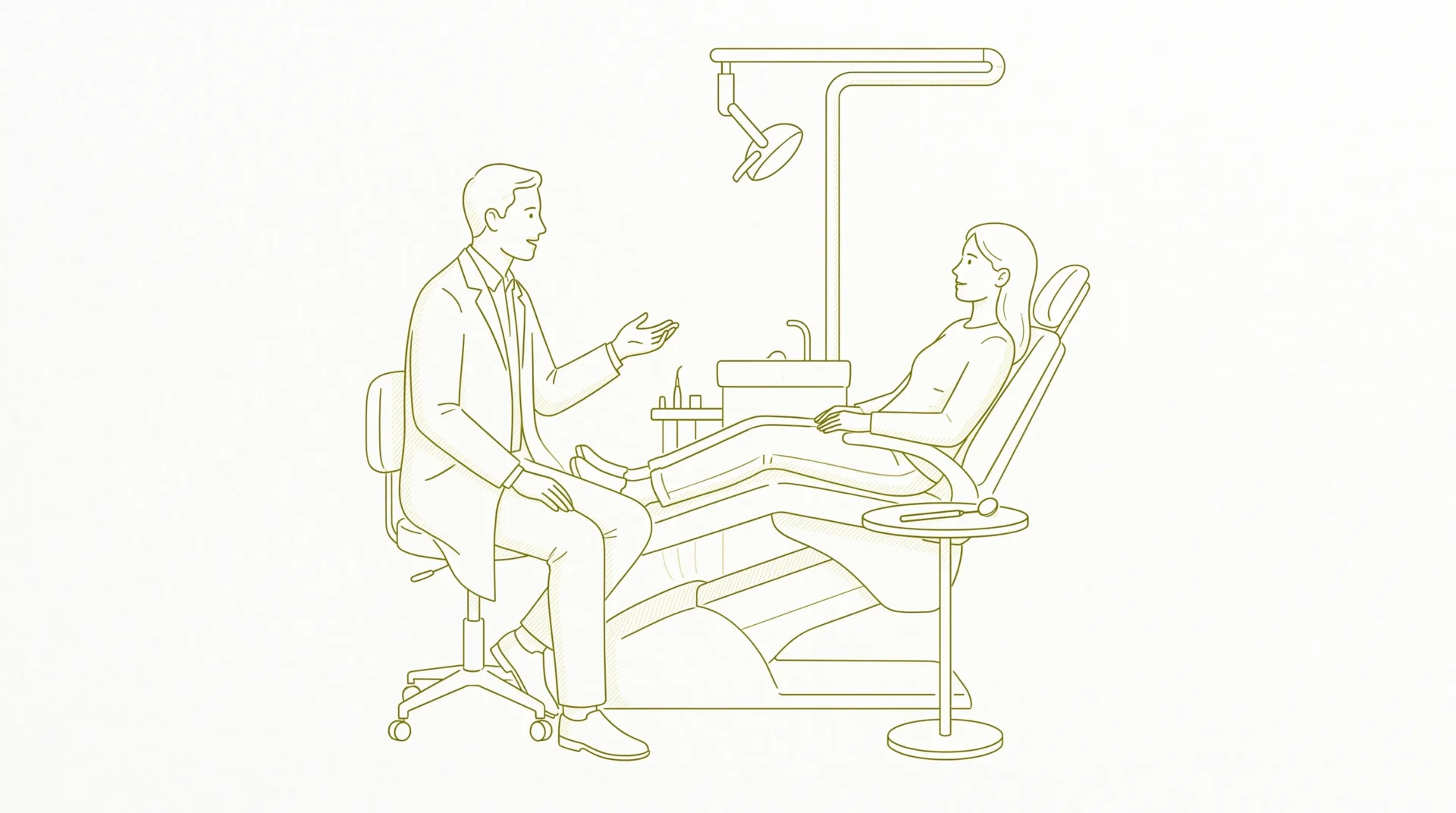
Many people worry that once they sit in the chair, they lose control. A gentle approach should do the opposite. You can ask the dentist to explain each step, pause when needed or avoid certain triggers where clinically possible.
Comfort measures depend on the appointment and your needs. They may include adjusting the chair position, using suction carefully, applying topical numbing gel before local anaesthetic or breaking treatment into shorter stages. Local anaesthetic may be recommended for procedures that could otherwise be uncomfortable, but suitability depends on your medical history and the planned treatment.
During a gentle dental appointment, consent is ongoing. That means you can ask what is happening before the dentist continues. If a procedure has risks, alternatives or possible side effects, these should be discussed in a way you can understand.
All dental procedures carry potential risks and benefits. Experiences vary between patients, and the same option may not be suitable for everyone. Your dentist can assess your oral health, symptoms and preferences before recommending care.
What if you feel embarrassed about your teeth?
Feeling embarrassed is common, especially if it has been years since your last visit or if you have visible decay, broken teeth, staining or gum bleeding. Dentists regularly see a wide range of oral health concerns, including problems that have developed gradually over time.
The purpose of an appointment is not to judge you. It is to identify what is happening, explain your options and help you understand what may be suitable. If you feel uncomfortable, you can say so at the start. Many patients find it easier when the dentist knows they are anxious or self-conscious.
If cost is one of your concerns, ask for a written treatment plan where treatment is recommended. Toorak Village Dental Care offers payment plan options, and families may also ask about children’s dental benefits support where relevant. Suitability, eligibility and out-of-pocket costs can vary, so it is reasonable to ask for this information before making decisions.
Gentle appointments for children and families
Children often benefit from short, calm visits that focus on familiarity and prevention. A first visit may involve counting teeth, checking growth and development, discussing brushing habits and helping the child become comfortable in the dental environment.
A gentle dental appointment for a child should use age-appropriate explanations and avoid creating fear. Parents can help by using simple language before the visit, such as “the dentist will count your teeth” rather than describing needles or drilling unless that is directly relevant and has been explained by the dentist.
For adults, family appointments may be a useful time to discuss preventive habits, dietary patterns and check-up timing. The right recall interval varies. Some people need more frequent reviews due to gum disease risk, decay risk, dry mouth, orthodontic appliances or medical factors, while others may be advised to attend less often.
Questions you can ask at the appointment
A dental visit is easier to understand when you know what to ask. You do not need to remember technical terms. Plain questions are often the most useful.
You might ask:
- What have you found today?
- Is this urgent or can it be monitored?
- What are the possible benefits and risks of treatment?
- Are there alternatives, including doing nothing for now where appropriate?
- What can I do at home to reduce my risk of future problems?
If you would like more ideas, this guide to questions to ask about your dental health may help you prepare before your visit.
When should you book sooner rather than later?
Routine dental care can often be planned at a time that suits you. Some symptoms, however, are worth having assessed promptly because they may indicate infection, injury or another issue that should not be left to worsen.
Consider arranging a dental assessment if you have facial swelling, dental trauma, severe or persistent toothache, pus, fever with dental symptoms, difficulty opening your mouth, uncontrolled bleeding or a broken tooth causing pain. If symptoms affect breathing, swallowing or general health, seek urgent medical care.
For non-urgent concerns, a gentle dental appointment can still be useful even if you are unsure whether treatment is needed. A dentist can examine the area, explain likely causes and outline suitable next steps based on your individual circumstances.
Frequently asked questions
How long does a gentle dental appointment take? Appointment length depends on why you are attending, your oral health and whether X-rays, cleaning or treatment planning are needed. A routine check-up is usually shorter than a complex consultation, but you can ask about expected timing when you book.
Can I ask the dentist to stop during the visit? Yes. Many patients agree on a simple hand signal before the examination begins. This can help you feel more in control and gives the dentist a clear cue to pause.
Will treatment happen at the first appointment? Sometimes treatment can be provided on the day, but this depends on the issue, your consent, appointment timing and clinical suitability. In many cases, the first visit focuses on assessment, diagnosis and planning.
Is a gentle appointment suitable if I have not seen a dentist for years? Yes, a gentle approach can be appropriate for people returning after a long break. The dentist can start with an examination, discuss any findings and help prioritise care without assuming everything must be done at once.
Can I bring someone with me? In many cases, bringing a support person is possible, particularly if you feel anxious. It is best to mention this when booking so the practice can explain what is practical within the appointment space.
Arranging care in Toorak
A dental examination can help determine the cause of symptoms and which options may be appropriate for your oral health, preferences and circumstances. If you would like to discuss a concern, routine check-up or cosmetic question, you can contact Toorak Village Dental Care to arrange an appointment in Toorak.
Your dentist can explain the potential benefits, limitations, risks and alternatives before you decide whether to proceed with any recommended care.
Disclaimer
The information provided on this website is for general informational and educational purposes only. It is not intended to replace professional dental advice, diagnosis or treatment. Dental needs and treatment outcomes vary between individuals. Always seek advice from a qualified dental practitioner regarding your specific circumstances before making decisions about your oral health or treatment. A consultation and clinical assessment are required to determine which treatment options may be suitable for you. All dental procedures carry potential risks and benefits, which will be discussed with you before treatment.