

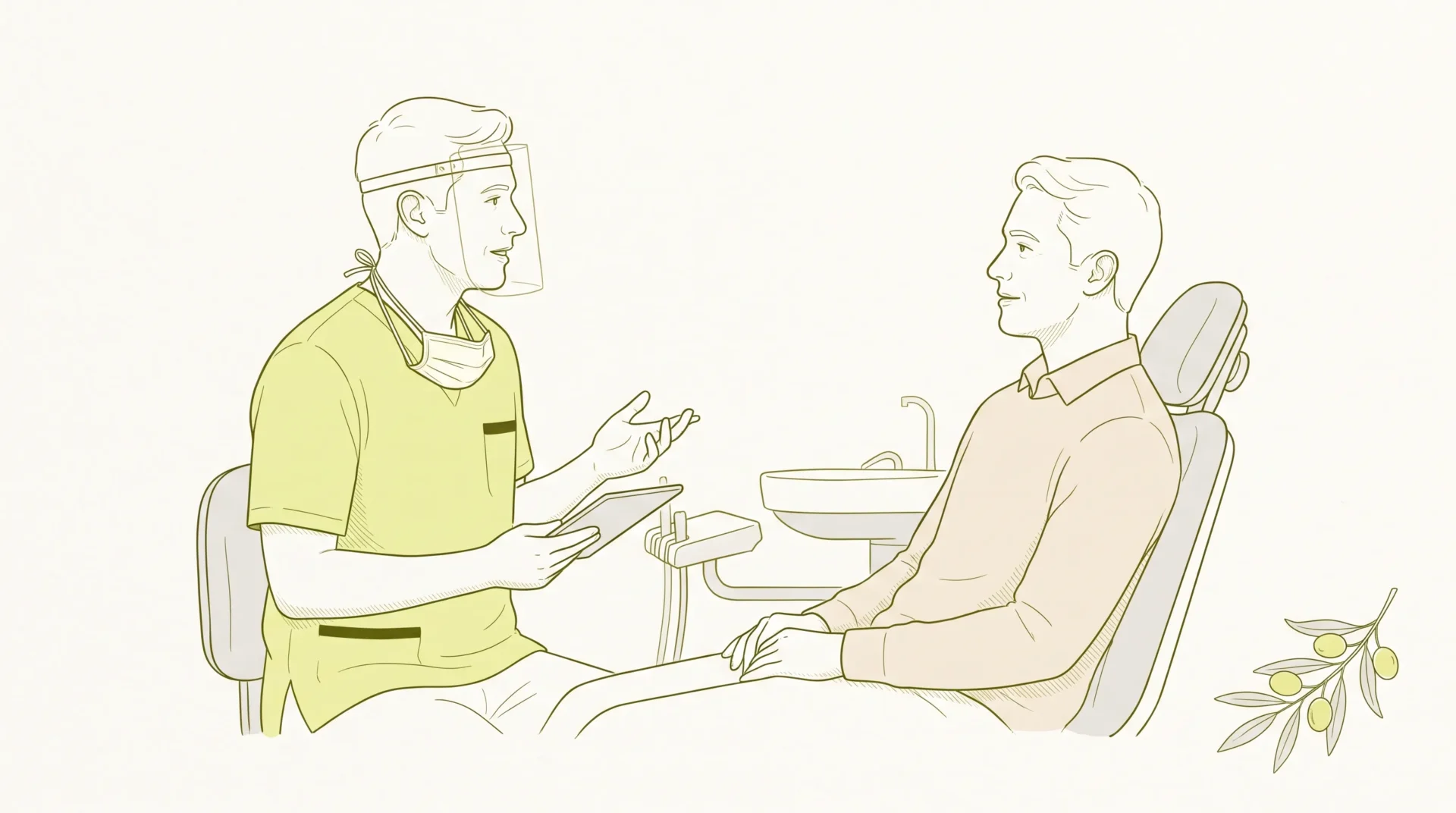
Before leaving an appointment with your dentist, dental care instructions should answer three practical questions: how should you look after the treated area, what changes should you expect and when should you contact the clinic? This matters whether you are waiting for a crown, partway through root canal treatment or recovering after a tooth removal.
Ask for advice that relates to your procedure rather than relying on general tips. The questions below can help you leave with a clear plan for the time between appointments. Your treating dentist’s instructions should take priority over general information.
What should I ask my dentist about dental care before I leave?
Start with: “What do I need to do differently until my next appointment?” Some treatments need only minor changes to your routine. Others require specific instructions about cleaning, eating or protecting a healing area.
Ask the dentist to explain:
- How to clean around the treated tooth or surgical site.
- Whether any foods, drinks or activities should be avoided, and for how long.
- Which symptoms may occur and when they should begin improving.
- What to do if a temporary filling, crown or dressing becomes loose.
- When to return and how to seek advice outside normal opening hours.
Written instructions can be useful, particularly if you feel anxious or have several things to remember. You can also repeat the advice back in your own words to check that you have understood it correctly.
If anxiety makes it difficult to ask questions, discussing this before treatment may help. Our article on dental care for nervous patients explains communication and comfort measures you can ask about.
How should I clean around the treated area?
Ask whether your usual brushing and between-teeth cleaning routine needs to change, particularly around stitches, a temporary restoration or tender gums.
For most adults, routine care includes brushing twice daily with fluoride toothpaste and cleaning between the teeth each day. The Australian Dental Association’s patient information provides guidance on these habits. However, a fresh surgical site may need different care during early healing.
Useful questions for your dentist about dental care after treatment include: “Can I brush directly over this area?” and “When can I restart flossing here?” If an interdental brush, a small brush designed to clean between teeth, is recommended, ask the dentist to demonstrate the appropriate size and technique.
Do not assume that a mouthwash is needed or that it replaces brushing. If a rinse is recommended, confirm which product to use, when to start and how long to continue. Some prescribed rinses can cause staining or changes in taste.
Once any temporary restrictions have ended, these everyday habits that support dental care can help you maintain a practical routine.
What can I eat, and should I avoid chewing on that tooth?
The answer depends on the treatment, the material used and whether the area is still numb. Ask for a specific timeframe rather than assuming that all fillings, crowns or surgical procedures need the same precautions.
While local anaesthetic is still working, you may accidentally bite your cheek, lip or tongue, or fail to notice that a drink is too hot. Ask when it is appropriate to eat and drink normally again.
If you have a temporary filling or crown, check whether you should avoid hard or sticky foods and chewing directly on that tooth. A tooth awaiting further restoration may need protection even when it feels comfortable.
After an extraction or other oral surgery, follow the instructions provided about food texture, drinks, smoking, vaping and physical activity. These instructions are intended to support healing and may differ from advice after a routine filling. Ask when each restriction can be lifted rather than continuing it indefinitely.
Which symptoms might occur, and for how long?
Ask your dentist what recovery may look like for your particular procedure. Mild sensitivity or tenderness can occur after some treatments, but there is no single recovery timetable that applies to everyone.
Describe symptoms precisely if you need to call later. It helps to explain whether discomfort happens with cold drinks, biting or no obvious trigger, and whether it is improving or becoming more noticeable.
| What you notice | A useful question for your dentist |
|---|---|
| Sensitivity to hot or cold | “Is this expected after my procedure, and when should I contact you if it continues?” |
| Discomfort when biting | “Could the bite need checking, or does this need another assessment?” |
| Tender gums near the treated area | “How should I clean here without irritating the tissue?” |
| Swelling or bleeding after surgery | “What amount may occur, and what changes mean I should seek help?” |
Discuss dental care with your dentist if symptoms are not following the expected recovery pattern. Do not wait for a scheduled review if pain is worsening, swelling develops or the tooth feels different when you bite.
Pain settling does not necessarily mean that a planned course of treatment is complete.
What if I have a temporary filling or unfinished treatment?
Temporary restorations protect a tooth between treatment stages, but they are not intended to replace the planned final restoration indefinitely. Ask what has been completed, what remains to be done and why the next appointment matters.
For example, during staged root canal treatment, the inside of the tooth is treated over one or more visits. A temporary filling may be used between appointments. Feeling better does not establish that the treatment is finished or that the tooth has its final protection.
Before leaving, ask: “If this temporary filling or crown comes out, what should I do and how soon should I contact you?” A loose or missing temporary restoration warrants advice from the treating clinic. Avoid chewing on the affected tooth while arranging that advice, and do not use household glue to put anything back.
Also clarify how to clean around the restoration. If floss catches, shreds or seems to loosen it, contact the clinic for technique advice rather than forcing the floss through.
Which symptoms mean I should seek help sooner?
Your dentist should explain which changes need a phone call, an earlier appointment or emergency medical attention. Ask for an after-hours plan, particularly if you are between treatment stages or recovering from surgery.
Contact a dentist promptly for worsening or severe pain, new swelling, a broken tooth or restoration, pus, or a persistent unpleasant taste. Fever or feeling generally unwell alongside dental pain or swelling also needs urgent assessment. These signs can have different causes and cannot be diagnosed reliably at home.
After oral surgery, seek urgent advice if bleeding continues despite following the pressure instructions you were given. Do not simply wait until the next routine appointment.
Difficulty breathing or swallowing, or rapidly spreading swelling of the face or neck, requires emergency medical attention. Call 000 or go to an emergency department. Healthdirect’s information on dental abscesses explains why a suspected dental infection needs professional assessment.
When speaking with your dentist, describe the symptoms and how quickly they have changed. You do not need to decide which treatment is required before making contact.
Do my medicines or health conditions change the advice?
Tell your dentist about prescription medicines, over-the-counter products and supplements, as well as allergies and relevant health changes. This information may affect healing advice, pain relief choices or the timing of further treatment.
For example, medicines that affect blood clotting may require particular planning around surgery. Do not stop prescribed medicine unless the appropriate treating health professional tells you to do so.
If pain relief is recommended, ask what is suitable for you, how to take it and whether it interacts with anything you already use. Pregnancy, kidney disease, stomach ulcers and other circumstances can affect which medicines are appropriate. A pharmacist can also help check medicine safety.
Ask your dentist whether dental care instructions need updating if your health or medicines change between visits. Antibiotics are not required for every episode of dental pain and do not replace treatment of its underlying cause. Do not take leftover antibiotics or someone else’s prescription.
When should I return, and what if I need to postpone?
Clarify whether your next visit is for active treatment, a healing review or a routine check-up. These appointments have different purposes and should not be treated as interchangeable.
A review may be needed to check healing or symptoms. An appointment to complete a filling, crown or root canal treatment may still be necessary even if you no longer have discomfort. Routine examinations are scheduled according to your oral health and risk factors, as explained in our guide to how often adults should have a dental check-up.
If cost, work or family commitments make the proposed timing difficult, raise this before postponing. Ask what delay may mean, whether there are reasonable alternatives and whether extra precautions are needed in the meantime.
You can also request a written treatment plan and cost estimate. A useful discussion covers the benefits, limitations and risks of proceeding, delaying or choosing another appropriate option.
Frequently asked questions
Should I keep brushing if my gums are tender after treatment? Do not abandon cleaning altogether, but ask how to adapt it. Gentle cleaning may be appropriate around tender gums, while a fresh surgical site may need different instructions. Follow the advice for your procedure.
Is sensitivity between appointments always normal? No. Sensitivity can occur after some treatments, but its cause and significance vary. Contact your dentist if it is worsening, lingering beyond the timeframe discussed or accompanied by pain when biting, swelling or spontaneous pain.
Can I wait until my next appointment if a temporary filling falls out? Contact the treating clinic for advice rather than assuming it can wait. The tooth’s condition, symptoms and stage of treatment will affect how soon it should be assessed.
Should I attend a follow-up if the tooth feels better? Check before cancelling. Symptoms can settle before treatment is complete, and some reviews assess healing or the condition of a restoration rather than pain alone.
Leave with instructions you can use at home
Before your next appointment ends, make sure you know how to clean and protect the area, which symptoms to monitor and when to return. Ask for clarification if any instruction is unclear or difficult to follow.
To discuss a concern, you can arrange an assessment with Toorak Village Dental Care in Toorak, Melbourne. Bring any existing aftercare instructions and your questions so the dentist can assess your circumstances and explain appropriate options.
Disclaimer
The information provided on this website is for general informational and educational purposes only. It is not intended to replace professional dental advice, diagnosis or treatment. Dental needs and treatment outcomes vary between individuals. Always seek advice from a qualified dental practitioner regarding your specific circumstances before making decisions about your oral health or treatment. A consultation and clinical assessment are required to determine which treatment options may be suitable for you. All dental procedures carry potential risks and benefits, which will be discussed with you before treatment.