

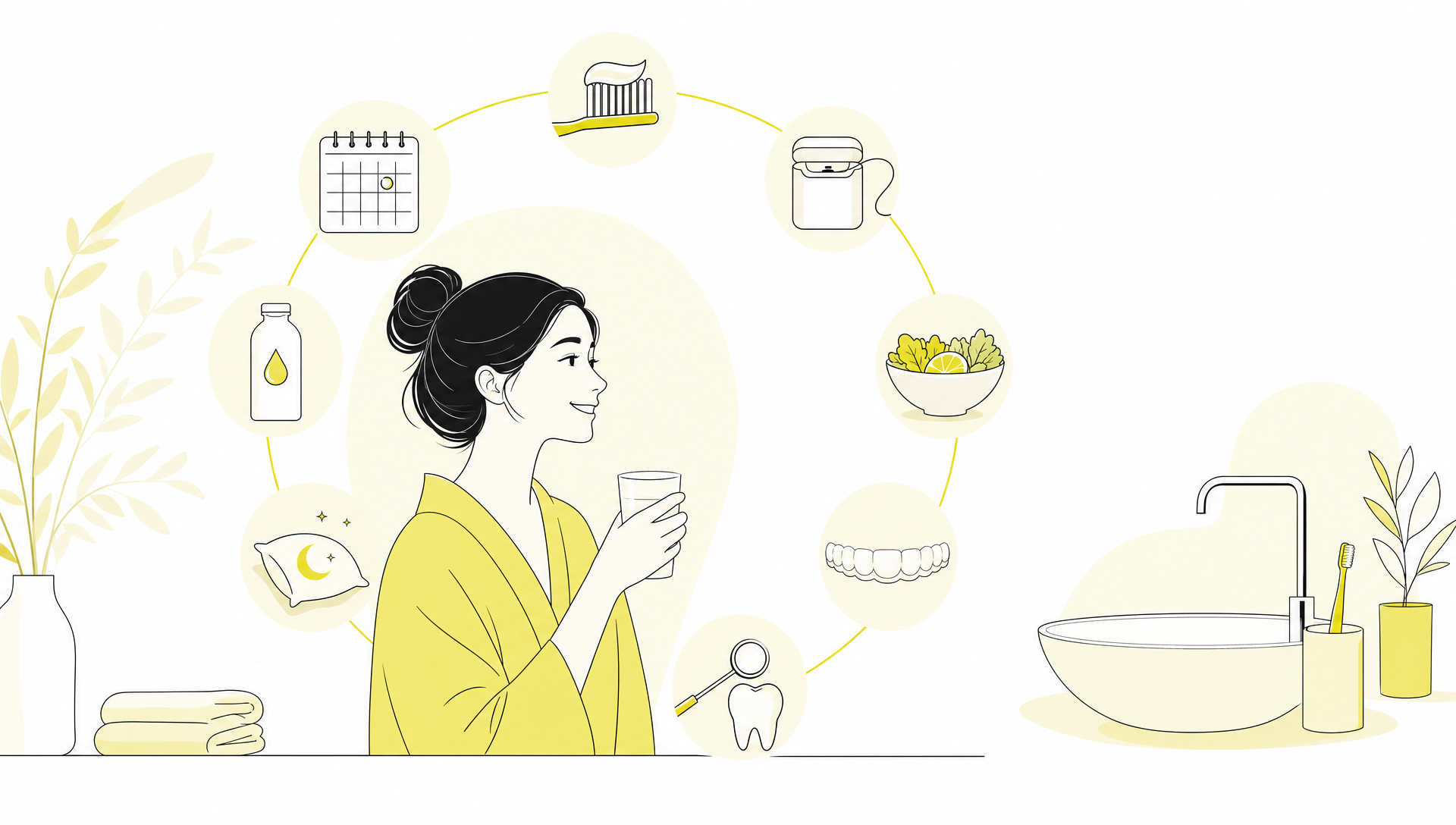
Good dental care is not built on one perfect appointment or a once-a-year deep clean. It is shaped by the small choices you make every day, often in less than five minutes at a time.
The good news is that most oral health habits are simple. You do not need a complicated routine or a bathroom cabinet full of products. You need consistency, the right technique, and a willingness to act early when something changes.
Below are eight everyday habits that can support healthier teeth and gums, reduce the risk of common dental problems, and help you feel more confident between dental visits.
Why everyday dental habits matter
Your mouth is constantly changing. Bacteria naturally build up on teeth, food and drink affect the balance of acids in the mouth, and your gums respond to plaque, stress, illness, hormones, and lifestyle factors. This is why dental care works best as a daily routine rather than a reactive fix.
A regular checkup can detect decay, gum disease, cracks, wear, and other problems, but what happens at home plays a major role in prevention. The Australian Dental Association's public oral health resource, Teeth.org.au, provides practical guidance on brushing, flossing, diet, and preventive care for Australians.
Here is a quick overview before we look at each habit in more detail.
| Everyday habit | Why it helps | Simple way to start |
|---|---|---|
| Brush twice daily | Removes plaque and supports gum health | Brush for two minutes morning and night |
| Clean between teeth | Reaches areas your toothbrush misses | Use floss, interdental brushes, or water flossers |
| Limit frequent sugar | Reduces acid attacks on enamel | Keep sweet foods to mealtimes where possible |
| Drink water often | Helps rinse the mouth and support saliva | Choose tap water as your main drink |
| Protect enamel | Reduces erosion and wear | Wait before brushing after acidic foods or drinks |
| Support gum health | Helps prevent inflammation | Do not ignore bleeding gums |
| Avoid tobacco and vaping | Lowers oral disease risk | Seek support if quitting feels difficult |
| Book regular dental visits | Finds problems early | Keep a routine that suits your oral health needs |
1. Brush twice a day with fluoride toothpaste
Brushing is the foundation of dental care, but technique matters just as much as frequency. A quick scrub across the front teeth is not enough to remove plaque from the gumline, back teeth, and chewing surfaces.
Aim to brush twice a day for two minutes using a fluoride toothpaste. Fluoride helps strengthen enamel and makes teeth more resistant to acid attacks from bacteria and food. Use a soft toothbrush or an electric toothbrush with a gentle pressure setting, especially if your gums are sensitive or you have a history of gum recession.
Angle the bristles toward the gumline and move slowly around the mouth. Clean the outside, inside, and chewing surfaces of every tooth. If you use an electric toothbrush, let the brush do the work rather than scrubbing hard. Brushing too aggressively can wear enamel and irritate gums over time.
A useful habit is to spit out excess toothpaste after brushing rather than rinsing vigorously with water. This leaves more fluoride on the teeth. If you are unsure whether this is suitable for you or your child, ask your dentist for personalised advice.
2. Clean between your teeth every day
Even excellent brushing leaves some areas untouched. The spaces between teeth are common places for plaque to build up, which can contribute to tooth decay, gum inflammation, and bad breath.
Cleaning between teeth once a day helps remove plaque before it hardens into tartar. Traditional floss works well for many people, but it is not the only option. Interdental brushes can be easier if you have larger spaces, crowns, bridges, implants, or orthodontic retainers. Water flossers may also be helpful for people who struggle with manual flossing, although they should be used correctly and not as a complete substitute for professional advice.
If your gums bleed when you first start flossing, do not panic and do not immediately stop. Mild bleeding can happen when gums are inflamed. With gentle daily cleaning, it may improve. If bleeding continues, or if your gums are swollen, sore, or receding, book a dental appointment to check for gum disease or other causes.
3. Reduce how often you snack on sugar
Sugar is not only about how much you eat. Frequency matters. Every time you consume sugary food or drink, bacteria in your mouth produce acids that attack enamel. If you graze on sweet snacks throughout the day, your teeth have less time to recover.
The World Health Organization recommends reducing free sugars intake for both adults and children, noting that lower intake supports better health outcomes, including oral health. Free sugars include sugars added to foods and drinks, as well as sugars naturally present in honey, syrups, fruit juices, and fruit juice concentrates.
You do not need to aim for perfection. Start by looking at your daily patterns. Soft drinks, sports drinks, flavoured milks, lollies, biscuits, sweetened cereals, and frequent juice can all add up. If you enjoy something sweet, having it with a meal is usually better for your teeth than sipping or snacking over several hours.
For children, routine is especially important. Keeping sweet drinks out of bottles and avoiding bedtime milk or juice after brushing can help protect baby teeth. Baby teeth matter because they support chewing, speech, confidence, and the correct spacing for adult teeth.
4. Make water your main drink
Water is one of the simplest tools for better dental care. It helps rinse food particles from the mouth, supports saliva, and can reduce the temptation to sip sugary or acidic drinks throughout the day.
Saliva plays a protective role by helping neutralise acids and delivering minerals back to enamel. Dry mouth, which can be caused by some medications, dehydration, mouth breathing, or certain health conditions, may increase the risk of decay and discomfort. If your mouth often feels dry, raise it with your dentist or GP, especially if it is new or persistent.
In many parts of Australia, tap water contains fluoride at safe, regulated levels. Choosing tap water as your regular drink can support enamel strength while also being affordable and convenient.
A practical habit is to drink water after coffee, wine, citrus drinks, or sweet snacks. It will not replace brushing or flossing, but it can help reduce the amount of residue sitting on your teeth between cleans.
5. Protect your enamel from acid and wear
Enamel is strong, but it is not invincible. Acidic foods and drinks can soften the enamel surface temporarily. Common examples include soft drinks, sparkling water with citrus, sports drinks, energy drinks, wine, vinegar-based foods, and citrus fruit.
Brushing immediately after something acidic can be rough on softened enamel. A better approach is to rinse with water, wait around 30 minutes, then brush. Chewing sugar-free gum may also help stimulate saliva after meals, provided it is appropriate for your jaw and dental condition.
To reduce acid exposure, try not to sip acidic drinks slowly over long periods. If you do drink them, having them with meals and using a straw can reduce contact with teeth. This does not make them harmless, but it may lessen exposure.
Enamel wear can also come from grinding or clenching. Many people grind their teeth during sleep without realising. Signs can include morning jaw soreness, headaches, flattened teeth, tooth sensitivity, or cracked fillings. If you notice these symptoms, mention them at your next dental visit. A dentist can check for wear patterns and discuss protective options if needed.
6. Pay attention to your gums, not just your teeth
Healthy gums are usually firm, comfortable, and do not bleed easily. If your gums bleed when brushing or flossing, feel tender, look puffy, or seem to be pulling away from your teeth, it is worth taking seriously.
Gum disease can begin quietly. Early gum inflammation, known as gingivitis, may be reversible with effective cleaning and professional care. More advanced gum disease can affect the supporting structures around teeth and may require ongoing management.
Daily gum care does not need to be complicated. Brush gently along the gumline, clean between teeth, avoid smoking, and book an appointment if bleeding persists. Bad breath that does not improve with brushing and flossing can also be a sign that plaque, tartar, decay, dry mouth, or gum issues need attention.
Gum health is also linked with general health. Conditions such as diabetes, some medications, pregnancy, and immune changes can influence the gums. This is why it helps to tell your dentist about changes in your medical history, even if they do not seem directly related to your teeth.
7. Be careful with whitening trends and DIY dental advice
Social media has made dental trends more visible, but not all advice is safe. DIY whitening hacks, abrasive powders, lemon juice, baking soda overuse, and unregulated whitening products can irritate gums or damage enamel. The short-term promise of a brighter smile is not worth long-term sensitivity or tooth wear.
If you are interested in whitening, the safest first step is a dental assessment. Stains can come from different causes, including surface staining, enamel changes, old fillings, trauma, or internal tooth discolouration. Whitening may not work evenly on crowns, veneers, or fillings, and sensitivity risk varies from person to person.
For patients who are suitable, professional whitening can be a controlled option. If you are considering a brighter smile, you can learn about the clinic's in-chair whitening offer and speak with the dental team about whether it is clinically appropriate for you.
The same caution applies to DIY aligners, at-home filing, or using online advice to manage pain. If something hurts, cracks, swells, or changes suddenly, a proper dental examination is the safer path.
8. Keep regular dental visits, even when nothing hurts
Pain is not the best measure of oral health. Tooth decay, gum disease, cracks, infections, and wear can develop before you feel obvious symptoms. Regular dental visits help identify issues earlier, when treatment may be simpler and more comfortable.
How often you should visit depends on your oral health, medical history, decay risk, gum condition, age, and previous dental treatment. Some people do well with six-monthly checkups, while others may need a different interval. Your dentist can recommend a schedule based on your needs.
Routine visits also give you a chance to improve your home care. A dentist or hygienist can show you areas you may be missing, recommend suitable interdental tools, discuss sensitivity, check your bite, screen soft tissues, and answer questions about products.
If you live or work nearby, choosing a local practice can make consistency easier. Toorak Village Dental Care offers general, cosmetic, emergency, and children’s dentistry, with online appointment booking available through the Toorak Village Dental Care website.
Common signs your dental care routine needs attention
Sometimes your mouth gives you clues that your routine needs adjusting or that it is time to see a dentist. Do not ignore changes that keep returning or do not improve.
Book a dental appointment if you notice:
- Bleeding gums that continue after consistent gentle cleaning
- Tooth sensitivity to cold, heat, or sweetness
- Persistent bad breath or a bad taste
- Pain when biting or chewing
- A chipped, cracked, loose, or darkening tooth
- Jaw pain, clicking, or morning headaches
- Mouth ulcers or patches that do not heal within two weeks
- Swelling around the gums, jaw, or face
Dental emergencies should be assessed promptly, especially if there is swelling, trauma, severe pain, uncontrolled bleeding, or signs of infection. Acting early can make a meaningful difference.
Frequently Asked Questions
How can I improve my dental care at home? Focus on brushing twice daily with fluoride toothpaste, cleaning between your teeth every day, drinking water regularly, limiting frequent sugar, and booking routine dental checkups. Small daily habits are more effective than occasional intense cleaning.
Is flossing really necessary if I brush well? Yes, for most people, cleaning between teeth is still important because toothbrush bristles cannot fully reach those tight spaces. If floss is difficult, ask your dentist whether interdental brushes or other tools would suit you better.
How often should I see a dentist? Many people attend every six months, but the right timing depends on your individual risk factors, gum health, medical history, and dental needs. Your dentist can recommend an interval that suits you.
What should I do if my gums bleed when brushing? Keep cleaning gently and consistently, but book a dental appointment if bleeding continues. Bleeding gums can be a sign of inflammation, plaque buildup, or gum disease, and early care is important.
Are electric toothbrushes better than manual toothbrushes? Both can work well when used correctly. Electric toothbrushes can make technique easier for some people, especially those who brush too quickly or struggle to clean thoroughly. A soft manual brush can also be effective with good technique.
Build better dental care into your routine
Better dental care does not require a complete lifestyle overhaul. Start with one habit, make it consistent, then build from there. Brushing well, cleaning between teeth, drinking more water, reducing frequent sugar, and seeing your dentist regularly can all help protect your smile over time.
If it has been a while since your last dental visit, or you have noticed sensitivity, bleeding gums, tooth pain, or changes in your smile, Toorak Village Dental Care can help with tailored advice and compassionate care. Book an appointment online and take the next step toward a healthier routine.
Disclaimer
The information provided on this website is for general informational and educational purposes only. It is not intended to replace professional dental advice, diagnosis or treatment. Dental needs and treatment outcomes vary between individuals. Always seek advice from a qualified dental practitioner regarding your specific circumstances before making decisions about your oral health or treatment. A consultation and clinical assessment are required to determine which treatment options may be suitable for you. All dental procedures carry potential risks and benefits, which will be discussed with you before treatment.