

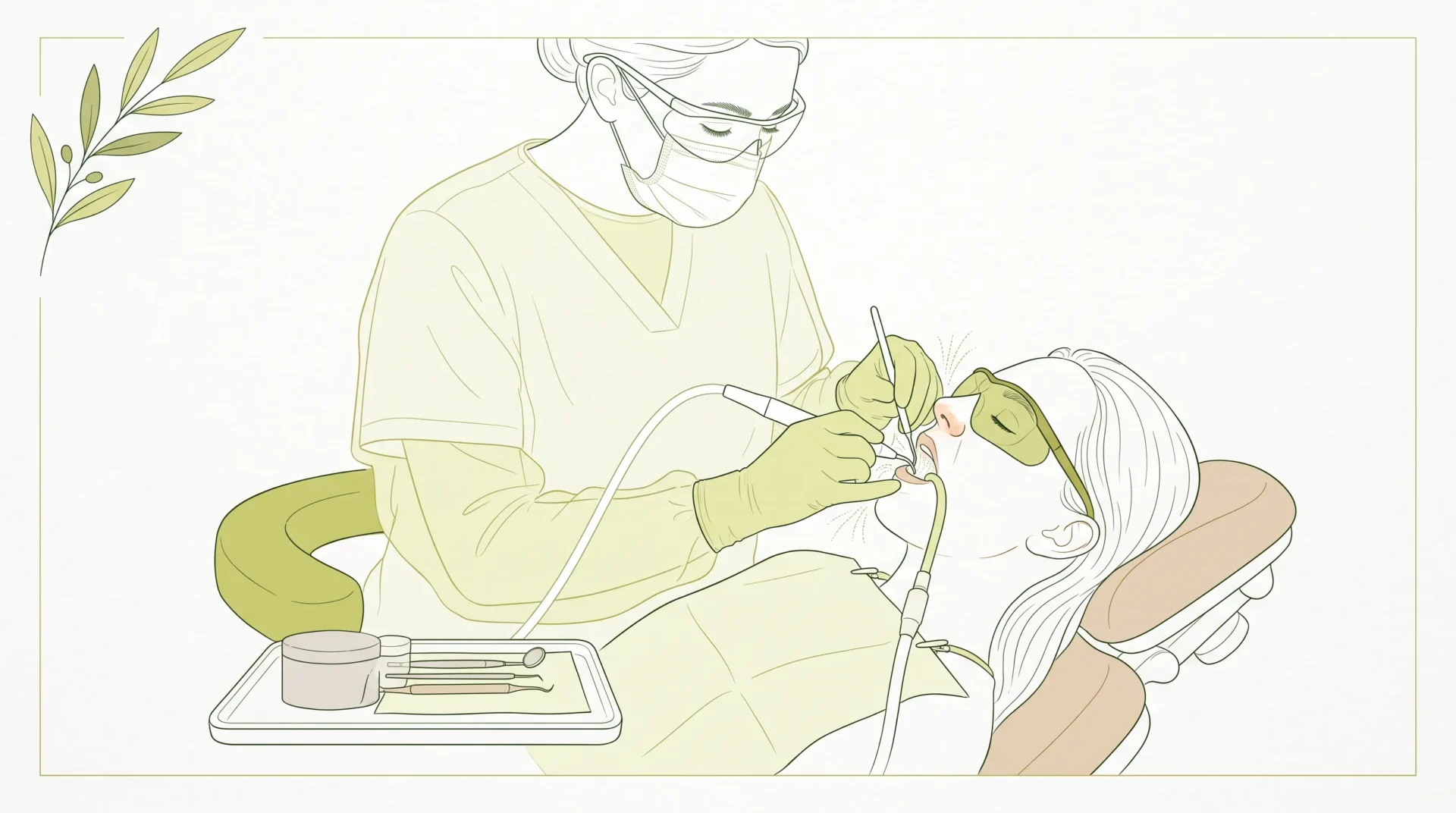
A check up and clean dentist visit usually combines an examination of your teeth, gums and mouth with professional removal of plaque and hardened deposits. Your dentist explains what they find and whether further care may be appropriate. X-rays, polishing and fluoride treatment depend on your individual needs, rather than being automatic parts of every appointment.
You may notice water spray, suction sounds and a scraping sensation during cleaning. You can ask questions or request a pause at any point. Knowing the sequence can make the appointment feel more familiar, particularly if it has been a while since your last visit.
Before the examination: a conversation about your health
The appointment generally begins with a discussion about your dental concerns and medical history. Mention sensitivity, bleeding gums, jaw discomfort or anything that has changed since your previous visit. It is also useful to explain whether you are attending for routine care or have a particular problem you want assessed.
Your dentist needs to know about medications, allergies, relevant health conditions and pregnancy. Some medicines affect bleeding, saliva or treatment planning. Do not stop prescribed medication yourself before an appointment.
If dental visits make you nervous, say so before the examination starts. You can discuss a hand signal for a break and ask the dentist to explain each stage before proceeding.
Our guide to preparing for a dentist appointment covers practical details, including the information worth bringing with you.
What happens during a check up and clean dentist visit?
Your teeth, gums and mouth are examined
Once you are comfortably positioned, the dentist uses a light, a small mirror and other examination instruments to assess your mouth. They look for signs of decay, damaged teeth, worn surfaces and problems around existing fillings or other dental work.
The examination also includes your gums and the soft tissues of your mouth, such as your tongue and inner cheeks. Depending on your circumstances, the dentist may assess your bite or ask about clenching and grinding.
To check gum health, they may gently measure the space between your teeth and gums with a slender instrument called a periodontal probe. These measurements, together with any bleeding and other findings, help assess whether the gums need additional attention.
You may feel light pressure during these checks. Tender or inflamed areas can be uncomfortable, so let the dentist know rather than trying to tolerate it silently.
X-rays are considered when they could provide useful information
Not everything can be seen by looking inside your mouth. Dental X-rays may help assess areas between teeth, beneath existing restorations or around tooth-supporting structures.
For a check up and clean dentist appointment, the decision to take X-rays should depend on your symptoms, examination findings, dental history and risk factors. They are not necessarily needed at every visit.
If an X-ray is recommended, the dentist can explain what it may show and why that information matters. Tell them if you are pregnant or could be pregnant, and mention any recent dental X-rays taken elsewhere.
Some dental X-rays involve holding a small sensor inside your mouth for a short time. If this feels uncomfortable or triggers your gag reflex, tell the dental team so they can consider adjustments.
What the professional clean feels like
Removing plaque and tartar
Plaque is a soft film of bacteria that builds up on teeth. When it hardens into tartar, also called calculus, brushing alone cannot remove it. A professional clean uses dental instruments to remove deposits from tooth surfaces and around the gumline.
An ultrasonic scaler may be used. Its tip vibrates and uses water to help remove deposits. You might hear a high-pitched sound and feel vibration, cool water or light pressure. Suction removes much of the water and saliva during the procedure.
Hand instruments may also be used to clean particular areas. These can produce a scraping sensation without the water spray. The approach depends on where deposits are located and how your teeth and gums respond.
During a check up and clean dentist visit, sensitive teeth or inflamed gums can make some areas more uncomfortable than others. Ask for a pause if needed. The dentist can discuss adjustments or whether another approach is appropriate.
Cleaning is not intended to cut away healthy tooth structure. However, temporary sensitivity, gum tenderness or minor bleeding can occur, especially where gums are inflamed.
Polishing and fluoride are not identical to cleaning
Polishing may be offered after deposit removal. It uses a rotating rubber cup or brush with polishing paste to remove some surface staining. You may notice a gritty texture and gentle pressure.
Polishing is not the same as teeth whitening and does not change the natural underlying colour of your teeth. Whether it is useful depends on your circumstances.
A fluoride product may also be recommended to help protect teeth against decay, particularly if your risk is higher. Your dentist can explain why it is being suggested and any eating or drinking instructions that apply to the specific product.
Comfort, breaks and your choices during the appointment
You do not need to wait until the procedure is finished to mention discomfort. Raising your hand gives the dental team a clear signal to stop so you can speak, swallow or rest your jaw.
A check up and clean dentist appointment should include discussion of proposed care and your consent before it proceeds. You can ask what is necessary today, what could be scheduled separately and what the alternatives involve.
If your teeth are very sensitive, or more extensive gum treatment is needed, your dentist may discuss options to manage discomfort. Local anaesthetic, which temporarily numbs an area, may be considered for some procedures. It is not required for every routine clean and has its own potential risks and limitations.
If your main concern is gagging, jaw fatigue or feeling overwhelmed, explain that specifically. This helps the dentist understand which part of the appointment needs adjustment, although experiences still vary between patients.

What happens after the clean?
Your teeth may feel smoother once deposits have been removed. Some people notice temporary sensitivity to cold or mild gum tenderness. Others have little discomfort afterwards.
Follow the instructions provided for your particular care. If fluoride was applied or local anaesthetic was used, the advice about eating and drinking may differ. Ask before leaving rather than assuming there is a standard waiting period.
Continue gentle brushing and cleaning between your teeth unless your dentist advises otherwise. Victoria’s Better Health Channel guidance on teeth and gum care explains why daily care remains important alongside dental visits.
Contact the clinic if discomfort is worsening, bleeding is persistent or you develop swelling. These symptoms deserve assessment rather than being assumed to be a normal response to cleaning.
If the dentist finds something that needs attention
The final discussion should explain what was found, what it means and which options may be reasonable. Not every finding requires immediate treatment. Some areas may be monitored, while others may need a separate appointment.
A check up and clean dentist visit does not replace more involved gum treatment when that is needed. If examination findings suggest periodontitis, a form of gum disease that affects the tissues supporting teeth, your dentist may recommend further assessment and a tailored treatment plan. Healthdirect’s information about gum disease explains the difference between gum inflammation and more advanced disease.
Before agreeing to additional care, ask about the expected benefits, possible risks, alternatives and costs. You can also ask what may happen if you choose to wait. Our article on questions to ask about your dental health offers useful prompts for that conversation.
Appointment length, costs and follow-up
Appointment length varies with your dental history, the amount of cleaning needed and whether further assessment is required. When booking, ask how much time has been allocated, especially if you are a new patient or have several concerns to discuss.
It is also reasonable to ask what the quoted fee includes. Examination, cleaning, X-rays and fluoride can be separate items, so confirm which services are proposed and whether any additional charges need your approval. If you have private health insurance, check your cover and limits with your insurer.
Your next appointment should be based on your oral health and risk factors, not simply a fixed schedule for everyone. Tell the dentist if cost, appointment timing or other circumstances could affect your ability to return, so these can be considered when planning care.
Frequently asked questions
Do I need a clean if I brush and floss regularly? Good home care helps control plaque, but hardened tartar may still develop. Your dentist can assess whether professional cleaning is needed and how frequently it is appropriate for you.
Can I attend if my gums bleed? Yes. Mention the bleeding when booking your check up and clean dentist appointment and explain how long it has been happening. Bleeding gums can have several causes and need assessment rather than a diagnosis based on symptoms alone.
What if I have not seen a dentist for years? Tell the team when booking. You may need additional assessment or cleaning across more than one appointment. The first visit can establish your current needs without assuming that you require extensive treatment.
Should I wait for a routine visit if I have toothache? Contact a dentist sooner for persistent toothache, swelling, a broken tooth or an injury. Difficulty breathing or swallowing with facial or neck swelling requires emergency medical attention. Call 000 in Australia.
Discuss your appointment with Toorak Village Dental Care
If you are considering a routine dental appointment in Toorak, Melbourne, you can contact Toorak Village Dental Care to discuss your concerns and arrange an assessment. Mention any sensitivity, anxiety or recent symptoms when booking.
The appointment is an opportunity to understand your oral health, ask questions and consider any recommendations before deciding how to proceed.
Disclaimer
The information provided on this website is for general informational and educational purposes only. It is not intended to replace professional dental advice, diagnosis or treatment. Dental needs and treatment outcomes vary between individuals. Always seek advice from a qualified dental practitioner regarding your specific circumstances before making decisions about your oral health or treatment. A consultation and clinical assessment are required to determine which treatment options may be suitable for you. All dental procedures carry potential risks and benefits, which will be discussed with you before treatment.