

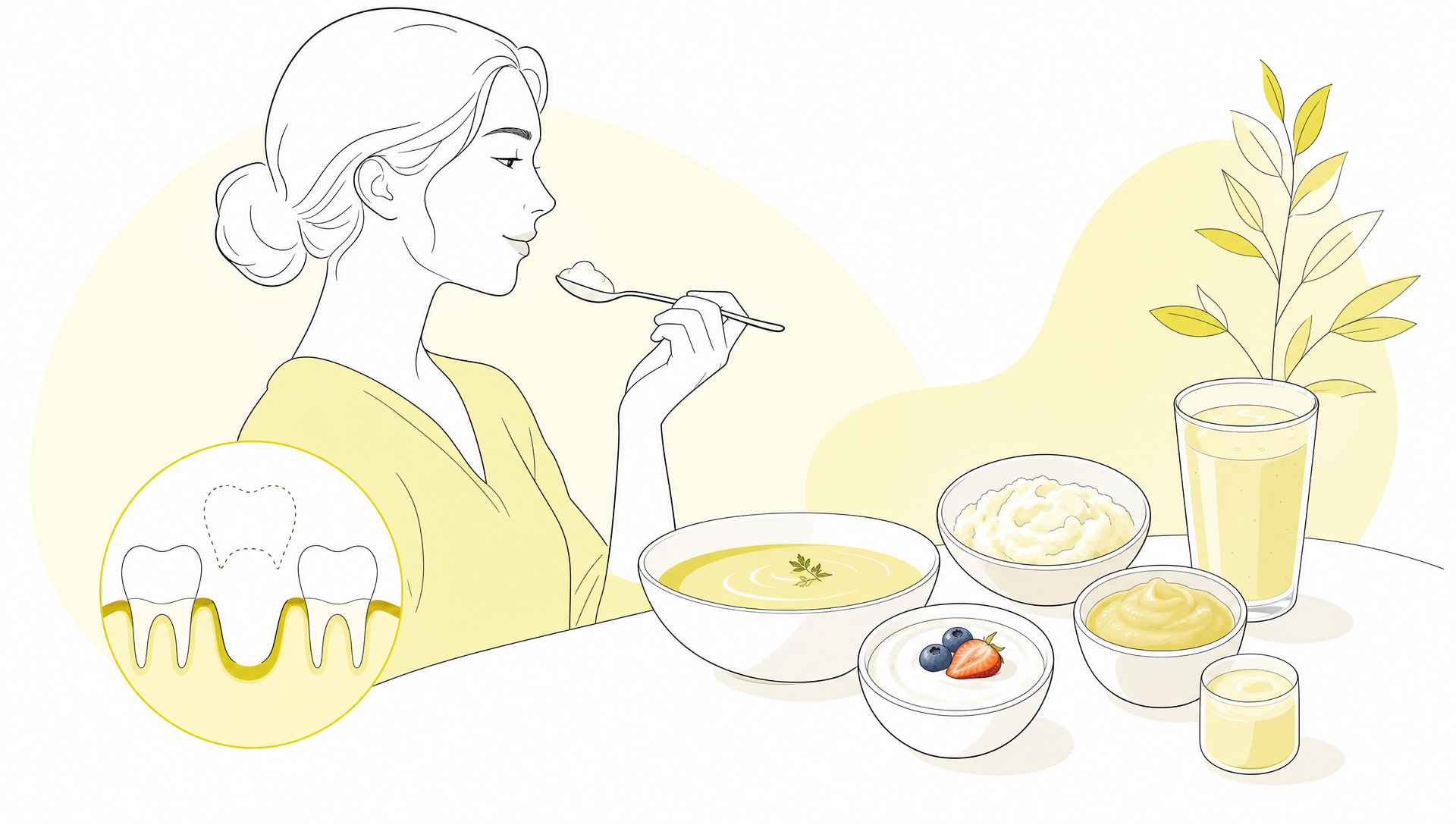
If you have just had a tooth removed, or you searched “dentist near me extraction” because a dental extraction may be coming up, the safest food choices are usually soft, cool or lukewarm, and easy to chew. In the first day, avoid hot drinks, alcohol, straws, crunchy foods, sticky foods and anything that could disturb the healing socket.
A tooth extraction leaves a small wound in the gum and bone where the tooth was removed. A soft blood clot forms in that area, and protecting it is one of the main reasons your dentist gives aftercare instructions. Food choices cannot replace professional advice, but they can make the first few days simpler and may reduce avoidable irritation.
Follow the specific instructions from your dentist, especially if you have had a surgical extraction, wisdom tooth removal, stitches, or have medical conditions that affect healing. The guidance below is general information for adults and families in Toorak and surrounding Melbourne suburbs.
Why food choices matter after a tooth extraction
The first stage of healing depends on the socket being left as undisturbed as possible. If the blood clot is dislodged too early, the area may become more painful and healing may be delayed. This is sometimes called dry socket, which your dentist can assess and manage if symptoms develop.
Food and drink can affect the extraction site in a few practical ways. Heat can encourage bleeding in the early hours. Sharp crumbs can poke the socket. Small grains and seeds can become trapped. Sucking through a straw can create pressure in the mouth, which may disturb the clot.
The aim is not to stop eating. Your body still needs fluids, energy and protein while it heals. The aim is to choose foods that are gentle on the area while you gradually return to normal eating as advised.
Healthdirect’s overview of tooth extraction is a useful Australian reference if you want a broader explanation of why extractions may be needed and what the procedure can involve.
What to eat after a tooth extraction in the first few days
Most people are advised to start with soft foods and fluids once the numbness has worn off enough to chew safely. Eating while the mouth is still numb can increase the chance of biting the cheek, lip or tongue without realising.
Choose foods that require very little chewing, are not too hot, and do not break into sharp pieces. Good options may include:
- Plain yoghurt or custard
- Smoothies served from a cup, not through a straw
- Mashed potato, pumpkin or sweet potato
- Lukewarm soup without hard pieces
- Scrambled eggs or soft omelette
- Soft pasta or noodles once chewing feels comfortable
- Avocado, hummus or well mashed beans
- Oats or porridge after it has cooled
- Soft fish or tender minced foods
- Apple puree or stewed fruit without seeds
Protein can be helpful because it supports normal tissue repair. If you have dietary restrictions, you can still focus on soft protein sources such as eggs, yoghurt, tofu, legumes that have been blended or mashed, or soft fish if suitable for your diet.
Drink plenty of water unless you have been told to restrict fluids for medical reasons. Sip gently from a cup. Avoid swishing, spitting forcefully or using a straw in the early healing period.
A simple food timeline after extraction
Healing time varies. A straightforward extraction may feel easier within a few days, while surgical extractions and wisdom teeth removal can take longer. Use this timeline as a guide only, and follow your dentist’s written instructions if they differ.
| Time after extraction | Food and drink focus | What to be careful with |
|---|---|---|
| First few hours | Rest, drink water when safe, wait until numbness reduces before eating | Avoid hot drinks, chewing while numb, alcohol and straws |
| First 24 hours | Cool or lukewarm soft foods that do not need much chewing | Avoid crunchy, spicy, acidic, sticky or seedy foods |
| Days 2 to 3 | Continue soft foods, add slightly more texture if comfortable | Chew away from the extraction site and avoid small grains getting trapped |
| Days 4 to 7 | Gradually return to normal foods if healing is comfortable | Do not rush hard or sharp foods if the area is still tender |
| After a week or as advised | Resume more usual eating when your dentist says it is appropriate | Seek advice if pain, swelling or bleeding is worsening rather than settling |
A practical rule is to let comfort guide you, but not to use comfort as the only sign of healing. Some people feel better before the socket is ready for harder foods. If you are unsure, especially after a complex extraction, ask your dentist before changing your diet.
Foods and drinks to avoid after a tooth extraction
Avoiding certain foods is usually temporary. The purpose is to reduce irritation and protect the socket while it starts to heal.
| Avoid | Why it may be a problem |
|---|---|
| Hot tea, coffee or soup in the first day | Heat may encourage bleeding or discomfort early on |
| Alcohol | It can affect bleeding and may interact with medicines |
| Straws | Suction may disturb the blood clot |
| Nuts, chips, crusty bread and crackers | Hard or sharp pieces can irritate the socket |
| Rice, quinoa, sesame seeds and berries with seeds | Small particles can lodge in the extraction site |
| Chewy lollies, caramels and sticky foods | They can pull at the area or be difficult to clean away |
| Very spicy or acidic foods | They may sting or irritate the gum |
| Carbonated drinks | Bubbles and acidity may feel irritating for some people |
Smoking and vaping are not foods, but they are worth mentioning because they can interfere with healing after an extraction. If you smoke or vape, ask your dentist for practical guidance before and after your appointment.
What about coffee, tea and alcohol?
Many patients ask about coffee first. It is generally sensible to avoid hot coffee and hot tea on the day of the extraction, especially while bleeding is still settling. If your dentist has not advised otherwise, a cool or lukewarm drink may be more comfortable, but do not use a straw.
Alcohol is usually best avoided for at least the first 24 hours, and for longer if your dentist or the medication instructions say so. Alcohol can interact with some pain relief and antibiotic medicines. It may also make it harder to judge whether bleeding or swelling is settling normally.
If you have been prescribed medication, read the label and follow the instructions from your dentist, pharmacist or doctor. Do not change the dose or combine medicines without advice from a qualified health professional.
How to eat without disturbing the socket
The way you eat matters as much as what you eat. Small changes can make meals more manageable while your mouth is tender.
Try to chew on the opposite side of your mouth if possible. Take smaller bites than usual. Let hot foods cool until they are lukewarm. Rinse only as directed, as vigorous rinsing too soon can disturb the clot.
After the first 24 hours, your dentist may advise gentle warm salt water rinses, particularly after meals. This is usually done by letting the water sit in the mouth and gently tipping it out, rather than swishing hard or spitting forcefully. Follow the instructions you were given, because advice may differ depending on the extraction.
What if food gets stuck in the extraction site?
Try not to poke the socket with toothpicks, fingernails, cotton buds or sharp objects. This can irritate the area and may disturb healing tissue.
If food seems to be sitting near the site after the first day, gentle rinsing as advised by your dentist may help. If something feels firmly trapped, or you have increasing pain, swelling, a bad taste or bad smell, contact your dentist for advice rather than trying to remove it aggressively at home.
Wisdom tooth sockets, especially lower wisdom teeth, may leave deeper spaces while healing. Your dentist may give you specific cleaning instructions if needed. Not everyone needs the same aftercare tools, so avoid using devices such as irrigation syringes unless your dentist has told you how and when to use them.
When can you eat normally again?
There is no single day that suits everyone. It depends on the tooth removed, whether the extraction was simple or surgical, your oral health, your general health, whether stitches were placed and how the site is healing.
Some people begin returning to more normal meals after a few days. Others need a softer diet for longer, particularly after wisdom tooth removal or multiple extractions. A cautious approach is to reintroduce foods gradually:
- Start with soft foods that need little chewing.
- Move to tender foods, such as soft pasta or fish, when chewing feels comfortable.
- Leave hard, sharp, sticky or seedy foods until the area is less tender and your dentist has not advised against them.
If a food causes throbbing, sharp discomfort or bleeding, stop and return to softer choices. Contact your dental clinic if symptoms are not settling as expected.
Keeping your mouth clean while you recover
Your dentist will tell you when and how to brush near the extraction area. In many cases, you continue brushing the rest of your teeth gently, while avoiding direct trauma to the socket in the early stage. Keeping plaque under control supports overall mouth health, but the extraction site needs gentle handling.
Once your dentist says the area is ready, returning to regular brushing with fluoride toothpaste and cleaning between the teeth can help reduce future dental problems. For broader home care tips after you have healed, this guide to everyday habits that support better dental care covers practical routines such as brushing, flossing and reducing frequent sugar exposure.
If you are new to dental care in Australia, or returning after some time away, you may also find this overview of how dental care in Australia works for new and returning patients helpful.
When to search “dentist near me extraction” or call your dentist
If the dentist who removed the tooth is available, contact them first because they know the details of your procedure. If you are in Toorak, South Yarra, Armadale, Prahran, Malvern, Hawthorn or nearby and cannot reach your usual clinic, searching for a local dental assessment can be appropriate.
Call a dentist promptly if you notice symptoms such as:
- Bleeding that does not settle after following the pressure instructions you were given
- Pain that is getting worse after 2 to 3 days rather than gradually settling
- Increasing swelling, pus, fever or a bad taste that does not improve with gentle rinsing
- A blood clot that seems to have come away, especially with strong throbbing pain
- Difficulty opening your mouth that is worsening
- Numbness that does not improve after the expected anaesthetic period
Seek urgent medical care if you have difficulty breathing or swallowing, swelling that is spreading quickly, or symptoms that feel severe or unsafe. These situations need prompt assessment.
If you are deciding where to arrange care, our article on choosing a dental clinic that suits your needs explains practical factors such as communication, costs, convenience and treatment planning.
Frequently Asked Questions
How long after a tooth extraction can I eat? Many people can eat once the numbness has worn off enough to chew safely, provided they choose soft, cool or lukewarm foods. Follow your dentist’s instructions, especially if your extraction was surgical or involved stitches.
Can I drink coffee after a tooth extraction? It is usually sensible to avoid hot coffee on the day of the extraction. If you have coffee later, keep it lukewarm rather than hot, sip from a cup and avoid straws unless your dentist has said otherwise.
Can I eat rice after a tooth extraction? Rice can be difficult in the early days because small grains may lodge near the socket. It is often better to wait until the area is less tender and you can gently clean after meals.
Is ice cream okay after a tooth extraction? Cool, soft foods may feel comfortable for some people after extraction. Choose options without crunchy mix-ins, nuts or hard pieces, and consider your general health and dietary needs.
What should I do if pain gets worse after a few days? Increasing pain after 2 to 3 days can happen for several reasons and should be assessed by a dentist. Do not try to diagnose the cause yourself, especially if there is swelling, fever, bad taste or bleeding.
When can I use a straw again? Your dentist is the best person to advise based on your extraction. Many patients are told to avoid straws in the early healing period because suction may disturb the clot.
Need advice after a tooth extraction in Toorak?
A dental examination can help determine whether your healing is progressing as expected and whether any further care may be appropriate. Treatment needs, recovery and risks vary between patients, so personalised advice is important.
If you have concerns after an extraction, or you would like to discuss an upcoming tooth removal, you can contact Toorak Village Dental Care to arrange an assessment in Toorak. The dental team can explain your options, aftercare instructions and any relevant risks or alternatives based on your individual situation.
Disclaimer
The information provided on this website is for general informational and educational purposes only. It is not intended to replace professional dental advice, diagnosis or treatment. Dental needs and treatment outcomes vary between individuals. Always seek advice from a qualified dental practitioner regarding your specific circumstances before making decisions about your oral health or treatment. A consultation and clinical assessment are required to determine which treatment options may be suitable for you. All dental procedures carry potential risks and benefits, which will be discussed with you before treatment.